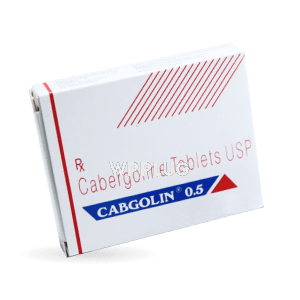
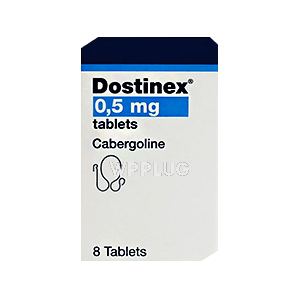
Dostinex
Dostinex is used to treat hormonal imbalance with much prolactin in the blood to reduce or prevent breast milk production.
| Product dosage: 0.25mg | |||
|---|---|---|---|
| Package (num) | Per pill | Price | Buy |
| 32 | 4.17 $ | 133.38 $ (0%) | 🛒 Add to cart |
| 48 | 3.88 $ | 200.07 $ 186.03 $ (7%) | 🛒 Add to cart |
| 56 | 3.78 $
Best per pill | 233.41 $ 211.77 $ (9%) | 🛒 Add to cart |
| Product dosage: 0.5mg | |||
|---|---|---|---|
| Package (num) | Per pill | Price | Buy |
| 32 | 7.97 $ | 255.06 $ (0%) | 🛒 Add to cart |
| 48 | 7.65 $ | 382.59 $ 367.38 $ (4%) | 🛒 Add to cart |
| 56 | 7.56 $
Best per pill | 446.35 $ 423.54 $ (5%) | 🛒 Add to cart |
Synonyms | |||
Similar products
Dostinex: Effective Prolactin Regulation for Hormonal Balance
Dostinex (cabergoline) is a prescription medication specifically formulated to address hyperprolactinemia, a condition characterized by abnormally high levels of the hormone prolactin. As a dopamine receptor agonist, it works by mimicking the action of dopamine in the brain, which normally inhibits prolactin secretion from the pituitary gland. This targeted mechanism makes it a first-line treatment for restoring hormonal equilibrium and managing associated symptoms. Clinical studies demonstrate its efficacy in normalizing prolactin levels, reducing tumor size in prolactinomas, and restoring reproductive function.
Features
- Active ingredient: Cabergoline 0.5mg per tablet
- Pharmacological class: Dopamine D2 receptor agonist
- Administration: Oral tablet formulation
- Half-life: Approximately 63–69 hours
- Bioavailability: 40–50% following oral administration
- Metabolism: Primarily hepatic via CYP3A4 enzyme system
- Excretion: Mainly through feces (72%) with minor renal elimination (18–20%)
Benefits
- Effectively reduces elevated prolactin levels to within normal physiological range
- Restores ovulation and regular menstrual cycles in women with hyperprolactinemic amenorrhea
- Improves fertility outcomes by addressing hormonal imbalances affecting reproduction
- Reduces galactorrhea (inappropriate lactation) in both male and female patients
- Demonstrates antiproliferative effects on prolactin-secreting pituitary adenomas
- Provides long-lasting prolactin suppression with twice-weekly dosing convenience
Common use
Dostinex is primarily indicated for the treatment of hyperprolactinemia disorders, including idiopathic hyperprolactinemia and prolactin-secreting pituitary adenomas (prolactinomas). It is prescribed for both microprolactinomas (<10mm) and macroprolactinomas (≥10mm). Common clinical applications include management of amenorrhea-galactorrhea syndrome, infertility related to hyperprolactinemia, and hypogonadism associated with elevated prolactin levels. The medication is also used preoperatively to reduce tumor size in macroprolactinomas or as long-term medical management when surgery is contraindicated or refused.
Dosage and direction
The recommended starting dosage is 0.25mg twice weekly, which may be increased gradually by 0.25mg per week at monthly intervals based on prolactin level monitoring. Most patients respond to doses between 0.5mg and 2mg per week, divided into two or more administrations. Maximum recommended dosage is 4.5mg per week. Tablets should be taken orally with food to minimize gastrointestinal discomfort. Dosage adjustments are necessary in hepatic impairment, and therapy should be initiated at the lowest possible dose in such cases. Treatment duration varies from several months to indefinite maintenance therapy depending on the underlying condition.
Precautions
Patients should undergo cardiovascular evaluation before initiation, including echocardiography to exclude valvular heart disease. Regular monitoring of prolactin levels is essential to determine optimal dosing. Blood pressure should be monitored periodically due to potential hypotensive effects. Use with caution in patients with hepatic impairment, requiring dosage adjustment and close monitoring. Patients should be advised about potential dizziness and somnolence that may impair driving or operating machinery. Pregnancy testing is recommended before treatment initiation in women of childbearing potential. Fibrotic complications, though rare, require monitoring through periodic imaging and clinical assessment.
Contraindications
Dostinex is contraindicated in patients with hypersensitivity to cabergoline, any ergot derivatives, or any component of the formulation. It should not be used in patients with uncontrolled hypertension, history of cardiac valvular disorders, or fibrotic disorders including pericarditis, pleuritis, or retroperitoneal fibrosis. Concomitant use with medications that may cause hypotension is contraindicated. The medication is not recommended for patients with severe hepatic impairment without close monitoring. Avoid use in patients with psychotic disorders due to potential exacerbation of symptoms through dopamine receptor stimulation.
Possible side effect
Common adverse reactions (≥5%) include nausea (27%), headache (26%), dizziness (15%), fatigue (8%), and abdominal pain (7%). Less frequent side effects comprise constipation (5%), dyspepsia (4%), vomiting (4%), and somnolence (4%). Cardiovascular effects may include orthostatic hypotension (3%) and hot flashes (3%). Neurological side effects can include paresthesia and vertigo. Serious but rare adverse events include cardiac valvulopathy, pleural effusion, pulmonary fibrosis, and psychotic disorders. Most side effects are dose-dependent and often diminish with continued therapy or dose reduction.
Drug interaction
Strong CYP3A4 inhibitors (ketoconazole, ritonavir, clarithromycin) significantly increase cabergoline exposure, requiring dosage reduction. Dopamine antagonists (phenothiazines, butyrophenones, metoclopramide) may diminish the prolactin-lowering effect. Concomitant use with antihypertensive medications may potentiate hypotensive effects. Ergot alkaloids should be avoided due to additive pharmacodynamic effects. Macrolide antibiotics and protease inhibitors may increase cabergoline concentrations. Alcohol may enhance the sedative effects of cabergoline. Always inform healthcare providers about all concomitant medications, including over-the-counter drugs and herbal supplements.
Missed dose
If a dose is missed, take it as soon as remembered unless it is nearly time for the next scheduled dose. Do not double the dose to make up for a missed administration. Maintain the regular dosing schedule and contact your healthcare provider if multiple doses are missed. For patients on twice-weekly dosing, if more than one dose is missed, prolactin levels should be monitored before resuming therapy. The long half-life of cabergoline provides some buffer against occasional missed doses, but consistent adherence is important for maintaining prolactin suppression.
Overdose
Symptoms of overdose may include severe nausea, vomiting, hypotension, syncope, hallucinations, and nasal congestion. Management involves supportive measures including gastric lavage if ingestion was recent, administration of activated charcoal, and maintenance of blood pressure with appropriate fluid replacement and vasopressors if necessary. There is no specific antidote for cabergoline overdose. Hemodialysis is not expected to be effective due to high protein binding and extensive tissue distribution. Cardiac monitoring is recommended in cases of significant overdose, particularly in patients with pre-existing cardiovascular conditions.
Storage
Store at room temperature between 15°C to 30°C (59°F to 86°F) in the original container. Protect from light and moisture. Keep the bottle tightly closed and store in a dry place. Do not transfer tablets to other containers. Keep out of reach of children and pets. Do not use after the expiration date printed on the packaging. Properly dispose of any unused medication through medication take-back programs or according to local regulations. Do not flush medications down the toilet or pour down the drain unless specifically instructed to do so.
Disclaimer
This information is provided for educational purposes only and does not constitute medical advice. Always consult with a qualified healthcare professional before starting or changing any medication regimen. Individual response to medication may vary, and only a healthcare provider can determine the appropriate treatment based on specific medical conditions and overall health status. The information presented here may not include all possible uses, directions, precautions, or interactions.
Reviews
Clinical studies demonstrate Dostinex’s efficacy with 80-90% of patients achieving normal prolactin levels within 4 weeks of treatment. Long-term studies show maintained efficacy with 70% of patients remaining normoprolactinemic after 5 years of therapy. Patient satisfaction surveys indicate improved quality of life measures related to symptom resolution. Medical professionals appreciate the convenient twice-weekly dosing regimen and generally favorable side effect profile compared to other dopamine agonists. However, some patients report initial gastrointestinal discomfort that typically resolves with continued treatment. Regular monitoring and dose individualization are emphasized in clinical practice to optimize outcomes.