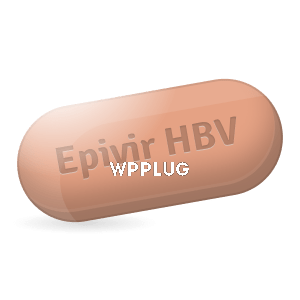
Epivir HBV
| Product dosage: 100mg | |||
|---|---|---|---|
| Package (num) | Per pill | Price | Buy |
| 30 | 2.07 $ | 62.01 $ (0%) | 🛒 Add to cart |
| 60 | 1.50 $ | 124.02 $ 90.09 $ (27%) | 🛒 Add to cart |
| 90 | 1.30 $ | 186.03 $ 117.00 $ (37%) | 🛒 Add to cart |
| 120 | 1.21 $ | 248.04 $ 145.08 $ (42%) | 🛒 Add to cart |
| 180 | 1.11 $ | 372.06 $ 200.07 $ (46%) | 🛒 Add to cart |
| 270 | 1.04 $ | 558.09 $ 281.97 $ (49%) | 🛒 Add to cart |
| 360 | 1.01 $
Best per pill | 744.12 $ 362.70 $ (51%) | 🛒 Add to cart |
Synonyms | |||
Epivir HBV: Effective Chronic Hepatitis B Viral Suppression
Epivir HBV is a nucleoside analogue antiviral medication specifically indicated for the treatment of chronic hepatitis B virus (HBV) infection in adults and pediatric patients. It functions by inhibiting the reverse transcriptase enzyme, a critical component for viral replication, thereby reducing the HBV DNA load in the bloodstream. This action helps to lower the risk of long-term liver complications, including cirrhosis and hepatocellular carcinoma. Clinical use is supported by extensive research demonstrating its efficacy in achieving sustained virological response when used as part of a comprehensive management plan under specialist supervision.
Features
- Active ingredient: Lamivudine 100 mg film-coated tablets
- Mechanism: Nucleoside reverse transcriptase inhibitor (NRTI)
- Formulation: Oral tablets; also available as an oral solution (5 mg per 1 mL)
- Prescription status: Rx-only, requiring medical supervision
- Manufactured under strict pharmaceutical quality control standards
- Packaging: Bottles of 30 or 60 tablets; 240 mL bottles for oral solution
Benefits
- Significantly reduces serum HBV DNA levels, aiding in virological suppression
- Helps normalize alanine aminotransferase (ALT) levels, indicating improved liver function
- Lowers the risk of disease progression to cirrhosis, decompensation, or hepatocellular carcinoma
- Generally well-tolerated profile with a established long-term safety database
- Convenient once-daily dosing supports adherence to treatment regimens
- Available in both tablet and liquid formulations for flexible administration across age groups
Common use
Epivir HBV is prescribed for the management of chronic hepatitis B infection in patients with evidence of active viral replication and either persistently elevated serum aminotransferases (ALT or AST) or histologically active disease. It is suitable for both hepatitis B e antigen (HBeAg)-positive and HBeAg-negative patients. Treatment decisions should be based on comprehensive assessment including viral load, liver enzyme levels, and histological findings when available. It is not indicated for treatment of HIV infection, hepatitis C virus, or acute HBV.
Dosage and direction
The recommended oral dose for adults with chronic hepatitis B is 100 mg once daily, with or without food. For pediatric patients aged 2–17 years, the dose is 3 mg per kg once daily, up to a maximum of 100 mg daily. The oral solution should be administered using the supplied measuring syringe for accuracy. Dosage adjustment is required in patients with renal impairment (creatinine clearance <50 mL/min):
- CrCl 30–49 mL/min: first dose 100 mg, then 50 mg daily
- CrCl 15–29 mL/min: first dose 100 mg, then 25 mg daily
- CrCl 5–14 mL/min: first dose 35 mg, then 15 mg daily
- CrCl <5 mL/min: first dose 35 mg, then 10 mg daily
Treatment duration should be individualized; virological and serological response should be assessed regularly.
Precautions
Prior to initiating therapy, test patients for HIV; undiagnosed or untreated HIV-1 infection may lead to HIV-1 resistance. Monitor hepatic function regularly—severe acute exacerbations of hepatitis B have been reported after discontinuation of therapy. Lactic acidosis and severe hepatomegaly with steatosis, including fatal cases, have been reported with nucleoside analogues. Use with caution in patients with risk factors for liver disease. Pancreatitis has been reported; monitor closely, especially in pediatric patients. Elderly patients may have decreased renal function; dose adjustment may be needed. Not recommended during pregnancy unless clearly needed; advise women not to breastfeed during treatment.
Contraindications
Hypersensitivity to lamivudine or any component of the formulation. Should not be used as monotherapy in patients with unrecognized or untreated HIV-1 coinfection, due to the risk of HIV resistance development.
Possible side effect
Common adverse reactions (≥10%): headache, nausea, diarrhea, fatigue, cough. Less common: pancreatitis, peripheral neuropathy, paresthesia, insomnia, dizziness, rash, pruritus, alopecia, arthralgia, muscle disorders, elevated creatine kinase, neutropenia, thrombocytopenia. Rare but serious: lactic acidosis, severe hepatomegaly with steatosis, hepatic decompensation, severe acute exacerbations of hepatitis upon discontinuation.
Drug interaction
Coadministration with other drugs that are renally eliminated or inhibit renal tubular secretion (e.g., trimethoprim/sulfamethoxazole) may increase lamivudine concentrations. No clinically significant interactions identified with adefovir, interferon alfa, or most common hepatically metabolized drugs. However, always review full medication list for potential interactions.
Missed dose
If a dose is missed, it should be taken as soon as possible that day. However, if it is almost time for the next dose, skip the missed dose and resume the usual dosing schedule. Do not double the dose to make up for a missed one.
Overdose
There is limited experience with overdose. Hemodialysis removes lamivudine; in cases of suspected overdose, standard supportive measures should be employed and removal via dialysis considered based on clinical status, especially in patients with renal impairment.
Storage
Store at 20°C to 25°C (68°F to 77°F); excursions permitted between 15°C and 30°C (59°F and 86°F). Keep the container tightly closed, and protect from moisture. Oral solution: store at 2°C to 8°C (36°F to 46°F); do not freeze. Discard any unused portion after 30 days of first opening the bottle.
Disclaimer
This information is intended for healthcare professionals and summarizes key product details. It does not replace full prescribing information. Always consult the official product labeling and practice guidelines before prescribing. Treatment decisions must be made by a qualified healthcare provider based on individual patient assessment.
Reviews
Clinical studies and post-marketing surveillance indicate that Epivir HBV is effective in suppressing HBV replication, with many patients achieving undetectable viral load and ALT normalization. It is regarded as a well-toleroption within treatment guidelines, though resistance development over time is a consideration. Healthcare providers appreciate its once-daily dosing and generally favorable safety profile. Patient feedback often highlights convenience and tolerability, though regular monitoring is emphasized to manage potential resistance or side effects.