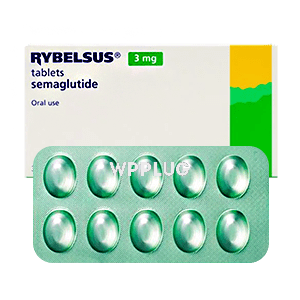
Rybelsus
| Product dosage: 14mg | |||
|---|---|---|---|
| Package (num) | Per pill | Price | Buy |
| 10 | 42.12 $ | 421.20 $ (0%) | 🛒 Add to cart |
| 20 | 36.27 $ | 842.40 $ 725.40 $ (14%) | 🛒 Add to cart |
| 30 | 34.32 $
Best per pill | 1263.60 $ 1029.60 $ (19%) | 🛒 Add to cart |
| Product dosage: 3mg | |||
|---|---|---|---|
| Package (num) | Per pill | Price | Buy |
| 10 | 29.25 $ | 292.50 $ (0%) | 🛒 Add to cart |
| 20 | 24.57 $ | 585.00 $ 491.40 $ (16%) | 🛒 Add to cart |
| 30 | 21.45 $
Best per pill | 877.50 $ 643.50 $ (27%) | 🛒 Add to cart |
| Product dosage: 7mg | |||
|---|---|---|---|
| Package (num) | Per pill | Price | Buy |
| 10 | 38.61 $ | 386.10 $ 386.10 $ (0%) | 🛒 Add to cart |
| 20 | 32.76 $ | 772.20 $ 655.20 $ (15%) | 🛒 Add to cart |
| 30 | 31.20 $
Best per pill | 1158.30 $ 936.00 $ (19%) | 🛒 Add to cart |
Synonyms | |||
Rybelsus: The First Oral GLP-1 for Type 2 Diabetes Management
Rybelsus (semaglutide) tablets represent a significant advancement in the pharmacological management of type 2 diabetes mellitus. As the first and only glucagon-like peptide-1 (GLF-1) receptor agonist available in an oral formulation, it offers a novel alternative to injectable GLP-1 therapies. This product card provides a comprehensive, expert-level overview of its clinical profile, intended for healthcare professionals to aid in informed prescribing decisions and patient counseling. Its mechanism of action leverages the body’s inherent incretin system to improve glycemic control with the convenience of a once-daily tablet.
Features
- Active Pharmaceutical Ingredient: Semaglutide
- Available Strengths: 3 mg, 7 mg, and 14 mg film-coated tablets
- Pharmacologic Class: Glucagon-like peptide-1 (GLP-1) receptor agonist
- Administration Route: Oral
- Recommended Frequency: Once daily
- Special Administration Instructions: Must be taken on an empty stomach with no more than 4 ounces of plain water, at least 30 minutes before the first food, beverage, or other oral medications of the day.
Benefits
- Provides effective glycemic control by stimulating insulin secretion and suppressing glucagon release in a glucose-dependent manner.
- Offers the proven cardiovascular benefits associated with the GLP-1 receptor agonist class in patients with established cardiovascular disease.
- Promotes weight loss as a beneficial secondary effect, aiding in the management of a common comorbidity in type 2 diabetes.
- Reduces the treatment burden for patients averse to or struggling with injectable therapies, potentially improving long-term adherence.
- Lowers the risk of hypoglycemia when used without insulin or a sulfonylurea, due to its glucose-dependent mechanism of action.
Common use
Rybelsus is indicated as an adjunct to diet and exercise to improve glycemic control in adults with type 2 diabetes mellitus. It is commonly used in patients for whom metformin is not tolerated or contraindicated, or as an add-on therapy to other antihyperglycemic agents, including metformin, sulfonylureas, SGLT2 inhibitors, basal insulin, and thiazolidinediones, when these alone do not provide adequate glycemic control. Its use is particularly considered for patients who would benefit from a GLP-1 receptor agonist but prefer an oral option.
Dosage and direction
The initiation and titration of Rybelsus must follow a strict protocol to minimize gastrointestinal side effects. The recommended starting dosage is 3 mg once daily for 30 days. After 30 days, the dose should be increased to 7 mg once daily. If additional glycemic control is needed after at least 30 days on the 7 mg dose, the dose may be increased to 14 mg once daily. The 3 mg dose is intended for treatment initiation and is not effective for glycemic control. The tablet must be swallowed whole with no more than 4 ounces of plain water. It must be taken at least 30 minutes before the first food, beverage, or other oral medication of the day. Waiting less than 30 minutes will substantially reduce absorption. The tablet should not be split, crushed, or chewed.
Precautions
- Pancreatitis: Patients should be informed of the characteristic symptom of persistent severe abdominal pain which may radiate to the back. Discontinue Rybelsus promptly if pancreatitis is suspected.
- Diabetic Retinopathy Complications: Rapid improvements in glycemic control have been associated with a temporary worsening of diabetic retinopathy. Patients with a history of diabetic retinopathy should be monitored.
- Hypoglycemia: The risk of hypoglycemia is increased when Rybelsus is used in combination with insulin secretagogues (e.g., sulfonylureas) or insulin. Consider reducing the dose of the secretagogue or insulin to lower the risk.
- Acute Kidney Injury: There have been postmarketing reports of acute kidney injury and worsening of chronic renal failure, which may sometimes require hemodialysis. These events often involve nausea, vomiting, diarrhea, or dehydration. Monitor renal function in patients reporting severe gastrointestinal reactions.
- Hypersensitivity Reactions: Serious hypersensitivity reactions (e.g., anaphylaxis, angioedema) have been reported. Discontinue Rybelsus and treat promptly per standard of care.
- Gastrointestinal Disease: Use may be associated with gastrointestinal adverse reactions, which may be severe. Not recommended in patients with severe gastrointestinal disease (e.g., gastroparesis).
Contraindications
Rybelsus is contraindicated in patients with:
- A personal or family history of medullary thyroid carcinoma (MTC).
- In patients with Multiple Endocrine Neoplasia syndrome type 2 (MEN 2).
- Patients with a history of hypersensitivity to semaglutide or any of the product’s excipients. Reactions including anaphylaxis and angioedema have been reported.
Possible side effect
The most common adverse reactions (incidence ≥5%) are gastrointestinal in nature, largely due to the drug’s mechanism of action. These include:
- Nausea (very common)
- Abdominal pain
- Diarrhea
- Decreased appetite
- Vomiting
- Dyspepsia (indigestion)
- Constipation These effects are usually mild to moderate in severity and transient, often diminishing over time with continued use. Serious but less common side effects can include pancreatitis, hypoglycemia (with concomitant use of other therapies), allergic reactions, and acute kidney injury.
Drug interaction
The absorption of Rybelsus relies on a specific gastric environment. Therefore, the timing of administration relative to other oral medications is critical.
- Other Oral Medications: Administer other oral medications at least 30 minutes after taking Rybelsus. Taking them simultaneously or shortly before can impair their absorption. This is particularly important for medications with a narrow therapeutic index (e.g., levothyroxine, warfarin). Monitor INR more frequently in patients on warfarin.
- Drugs that Slow GI Motility: Concomitant use with drugs that slow gastrointestinal transit (e.g., anticholinergics like atropine) may worsen constipation and could potentially increase the absorption of Rybelsus.
- Insulin and Secretagogues: Coadministration increases the risk of hypoglycemia. A reduction in the dose of insulin or the insulin secretagogue may be required.
Missed dose
If a dose is missed, the patient should skip the missed dose and take the next daily dose at the regular time. They should not take two doses on the same day to make up for a missed dose. Re-initiate the next day’s dose according to the standard administration instructions (on an empty stomach, 30+ minutes before food).
Overdose
Overdose would be expected to result in severe nausea, severe vomiting, and potentially severe hypoglycemia if combined with other glucose-lowering agents. In the event of a suspected overdose, appropriate supportive treatment should be initiated based on the patient’s clinical presentation. Hypoglycemia should be treated with oral carbohydrates or intravenous glucose, as appropriate. Because semaglutide has a long half-life (approximately one week), supportive measures and monitoring may need to be prolonged. There is no specific antidote.
Storage
- Store Rybelsus in the original blister pack at room temperature between 68°F to 77°F (20°C to 25°C).
- Excursions are permitted between 59°F to 86°F (15°C to 30°C).
- Keep the tablets in the original blister card to protect them from moisture.
- Do not store in a bathroom cabinet or other humid locations.
- Keep out of reach of children and pets.
Disclaimer
This information is intended for educational purposes and for use by healthcare professionals. It is a summary and does not include all possible information about this product. It is not a substitute for reading the entire FDA-approved Prescribing Information. It does not constitute medical advice. Patients must be instructed to read the accompanying Medication Guide. The safe and effective use of Rybelsus is the responsibility of the prescribing healthcare provider, who must make any treatment decisions based on the individual patient’s medical history, current condition, and the full Prescribing Information.
Reviews
- “As an endocrinologist, the introduction of an oral GLP-1 has been a game-changer for patient acceptance and adherence. The efficacy profile is strong and consistent with the injectable semaglutide formulation, which is reassuring.” – Dr. A. Sharma, MD, Endocrinology
- “The titration schedule is key. Starting low and going slow dramatically improves GI tolerance. My patients who stick with the 3mg for the full month have a much smoother transition to the higher, therapeutic doses.” – Nurse Practitioner B. Jones, CDE
- “The cardiovascular outcome trial data supporting this drug class gives me great confidence in prescribing it for my appropriate patients with type 2 diabetes and established CVD. The oral route is a significant advantage.” – Dr. C. Lee, Cardiologist
- “The administration instructions are very specific but manageable for motivated patients. It requires a shift in morning routine, but most of my patients find it worthwhile for the benefits of improved A1c and weight loss.” – Pharmacist D. Miller