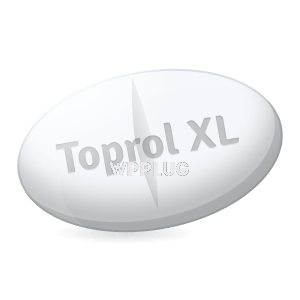
Toprol XL
Toprol XL is used for treating high blood pressure, angina, and heart failure.
| Product dosage: 100mg | |||
|---|---|---|---|
| Package (num) | Per pill | Price | Buy |
| 30 | 3.24 $ | 97.11 $ (0%) | 🛒 Add to cart |
| 60 | 2.55 $ | 194.22 $ 153.27 $ (21%) | 🛒 Add to cart |
| 90 | 2.33 $ | 291.33 $ 209.43 $ (28%) | 🛒 Add to cart |
| 120 | 2.21 $ | 388.44 $ 265.59 $ (32%) | 🛒 Add to cart |
| 180 | 2.11 $ | 582.66 $ 379.08 $ (35%) | 🛒 Add to cart |
| 270 | 2.02 $
Best per pill | 873.99 $ 546.39 $ (37%) | 🛒 Add to cart |
| Product dosage: 25mg | |||
|---|---|---|---|
| Package (num) | Per pill | Price | Buy |
| 60 | 0.92 $ | 54.99 $ (0%) | 🛒 Add to cart |
| 90 | 0.79 $
Best per pill | 82.48 $ 71.37 $ (13%) | 🛒 Add to cart |
Similar products
Toprol XL: Advanced Beta-Blocker Therapy for Cardiovascular Health
Toprol XL (metoprolol succinate) is an extended-release beta-blocker medication designed to manage hypertension, angina, and heart failure, and to improve survival after a heart attack. It belongs to a class of drugs that work by blocking the effects of certain natural chemicals, such as epinephrine, on the heart and blood vessels. This action helps to lower heart rate, blood pressure, and strain on the heart, providing long-term cardiovascular protection and symptom relief. Available by prescription only, Toprol XL is a cornerstone in the management of chronic heart conditions, offering 24-hour coverage with a single daily dose for consistent therapeutic effect.
Features
- Active ingredient: Metoprolol succinate
- Formulation: Extended-release tablets
- Available strengths: 25 mg, 50 mg, 100 mg, 200 mg
- Administration: Oral, once daily
- Mechanism: Selective beta-1 adrenergic receptor blocker
- Half-life: Approximately 3–7 hours (extended-release profile)
- Bioavailability: Reduced by food; recommend consistent administration relative to meals
Benefits
- Effectively lowers high blood pressure, reducing the risk of stroke, heart attack, and kidney problems.
- Decreases the frequency and severity of angina attacks, improving exercise tolerance and quality of life.
- Manages heart failure symptoms, such as shortness of breath and fatigue, and can reduce hospitalizations.
- Improves survival rates following a myocardial infarction (heart attack) when initiated early.
- Provides 24-hour therapeutic coverage with a single daily dose, enhancing adherence.
- Reduces mortality in certain patient populations with chronic heart failure.
Common use
Toprol XL is commonly prescribed for the management of hypertension (high blood pressure), either as monotherapy or in combination with other antihypertensive agents. It is also indicated for the long-term treatment of chronic stable angina, to reduce the risk of cardiovascular mortality in hemodynamically stable patients after a heart attack, and for the treatment of stable, symptomatic (NYHA Class II or III) heart failure of ischemic, hypertensive, or cardiomyopathic origin.
Dosage and direction
Dosage must be individualized based on patient response and clinical condition. For hypertension or angina, the usual initial dose is 25–100 mg once daily, which may be increased at weekly intervals until optimum blood pressure control or angina relief is achieved. For heart failure, treatment should be initiated under close supervision at 25 mg once daily (12.5 mg once daily in more severe cases), with dosage up-titration every two weeks as tolerated. For post-myocardial infarction, the recommended dose is 100 mg twice daily. Tablets should be swallowed whole and not crushed or chewed; they may be taken with or immediately following meals to minimize potential gastrointestinal upset.
Precautions
Patients should be advised not to abruptly discontinue Toprol XL, as sudden cessation may exacerbate angina or precipitate myocardial infarction. Use with caution in patients with diabetes, as beta-blockers may mask tachycardia occurring with hypoglycemia. May aggravate symptoms of peripheral vascular disease or Raynaud’s phenomenon. Can mask signs of hyperthyroidism. May cause worsening of heart failure in susceptible individuals; monitor for weight gain or dyspnea. Use cautiously in patients with bronchospastic disease; although metoprolol is cardioselective, some beta-1 selectivity is lost at higher doses.
Contraindications
Toprol XL is contraindicated in patients with severe bradycardia, heart block greater than first degree, cardiogenic shock, decompensated cardiac failure, sick sinus syndrome (unless a permanent pacemaker is in place), and in patients who are hypersensitive to any component of the formulation. It is also contraindicated in patients with sinus bradycardia (rates less than 45–50 beats per minute) and in those with hypotension (systolic blood pressure less than 100 mmHg).
Possible side effect
Common side effects may include fatigue, dizziness, depression, bradycardia, diarrhea, pruritus, rash, and shortness of breath. Less frequently, patients may experience insomnia, nightmares, cold extremities, heart failure exacerbation, bronchospasm (in predisposed individuals), and masking of hypoglycemia symptoms. Rare but serious adverse effects include hepatotoxicity, disorientation, and severe hypotension. Most side effects are dose-dependent and may diminish over time.
Drug interaction
Toprol XL may interact with other antihypertensive agents, resulting in additive hypotensive effects. Concurrent use with calcium channel blockers (e.g., verapamil, diltiazem) may lead to bradycardia or heart block. Coadministration with clonidine may potentiate rebound hypertension upon discontinuation of either drug. CYP2D6 inhibitors (e.g., fluoxetine, quinidine) can increase metoprolol concentrations. May enhance the hypoglycemic effect of insulin and oral antidiabetic drugs. Use with sympathomimetics (e.g., epinephrine) may reduce the efficacy of both drugs.
Missed dose
If a dose is missed, it should be taken as soon as remembered on the same day. However, if it is near the time of the next dose, the missed dose should be skipped and the regular dosing schedule resumed. Doubling the dose to make up for a missed one is not recommended, as it may increase the risk of adverse effects.
Overdose
Symptoms of overdose may include severe bradycardia, hypotension, heart failure, bronchospasm, hypoglycemia, and coma. Management is supportive and symptomatic, including gastric lavage if ingestion was recent. Atropine can be administered for bradycardia; vasopressors (e.g., norepinephrine) for hypotension; and glucagon or intravenous glucose for hypoglycemia. In refractory cases, transvenous cardiac pacing may be necessary.
Storage
Store at room temperature (20–25°C or 68–77°F), in a tightly closed container, away from light, moisture, and heat. Keep out of reach of children and pets. Do not use beyond the expiration date printed on the packaging.
Disclaimer
This information is intended for educational purposes only and does not constitute medical advice. Always consult a qualified healthcare professional for diagnosis and individualized treatment recommendations. Do not initiate, adjust, or discontinue any medication without professional guidance.
Reviews
Clinical studies and patient reports consistently affirm the efficacy of Toprol XL in managing hypertension, angina, and heart failure, with many users noting improved exercise capacity and quality of life. Some patients report initial side effects such as fatigue or dizziness, which often subside with continued use. Adherence is generally high due to the convenience of once-daily dosing. However, individual experiences may vary, and close monitoring by a healthcare provider is essential to optimize therapeutic outcomes.