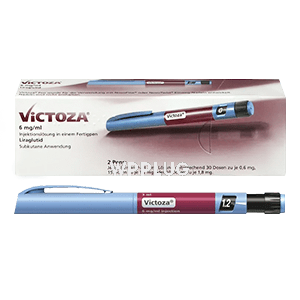
Victoza
| Product dosage: 6mg | |||
|---|---|---|---|
| Package (num) | Per injector | Price | Buy |
| 1 | 526.50 $ | 526.50 $ (0%) | 🛒 Add to cart |
| 2 | 497.25 $
Best per injector | 1053.00 $ 994.50 $ (6%) | 🛒 Add to cart |
Synonyms | |||
Victoza: Advanced GLP-1 Therapy for Effective Type 2 Diabetes Management
Victoza (liraglutide) is a glucagon-like peptide-1 (GLP-1) receptor agonist injection prescribed to improve glycemic control in adults with type 2 diabetes mellitus. It is designed as an adjunct to diet and exercise, offering a mechanism of action that not only lowers blood sugar but also supports cardiovascular health and potential weight management. This injectable therapy represents a significant advancement in diabetes care, providing a once-daily dosing option that mimics the body’s natural incretin hormones. Clinical studies have demonstrated its efficacy in reducing HbA1c levels while minimizing the risk of hypoglycemia when used without sulfonylureas or insulin.
Features
- Active ingredient: liraglutide
- Administration: subcutaneous injection
- Available in pre-filled, multi-dose pens (3 mL) delivering doses of 0.6 mg, 1.2 mg, or 1.8 mg
- Once-daily dosing, independent of meals
- Requires refrigeration before first use; may be stored at room temperature after initiation for up to 30 days
- Not intended for use in type 1 diabetes or diabetic ketoacidosis
Benefits
- Effectively lowers HbA1c through glucose-dependent insulin secretion and glucagon suppression
- Reduces the risk of major adverse cardiovascular events in patients with established cardiovascular disease
- Supports weight loss as a favorable side effect, aiding in overall metabolic health
- Low incidence of hypoglycemia when not combined with insulin or sulfonylureas
- Convenient once-daily dosing improves adherence compared to multiple daily regimens
- May preserve beta-cell function over the long term
Common use
Victoza is commonly prescribed for adults with type 2 diabetes mellitus as a monotherapy or in combination with other glucose-lowering agents such as metformin, sulfonylureas, or basal insulin when glycemic targets are not achieved with lifestyle modifications and existing medications. It is particularly beneficial for patients who require additional glycemic control without significant weight gain or increased hypoglycemia risk. It may also be considered for individuals with established cardiovascular disease due to its proven cardiovascular benefits.
Dosage and direction
The recommended starting dose is 0.6 mg subcutaneously once daily for at least one week. This initial dose is intended to reduce gastrointestinal symptoms and is not effective for glycemic control. After one week, the dose should be increased to 1.2 mg once daily. If additional glycemic control is needed and the 1.2 mg dose is tolerated, the dose may be further increased to 1.8 mg once daily. Administer at any time of the day, independent of meals, but preferably at the same time each day. Inject subcutaneously in the abdomen, thigh, or upper arm; rotate injection sites to avoid lipodystrophy.
Precautions
- Monitor for signs of pancreatitis (persistent severe abdominal pain, sometimes radiating to the back, with or without vomiting). Discontinue promptly if suspected.
- Observe for symptoms of hypoglycemia, especially when used in combination with insulin secretagogues or insulin.
- Use with caution in patients with renal impairment or severe gastrointestinal disease.
- Not recommended during pregnancy unless potential benefit justifies potential risk; advise premenopausal women of reproductive potential to use contraception.
- Thyroid C-cell tumors have been observed in rodents; although relevance to humans is unknown, it is contraindicated in patients with a personal or family history of medullary thyroid carcinoma or Multiple Endocrine Neoplasia syndrome type 2.
- Monitor for allergic reactions; discontinue if severe.
Contraindications
- Personal or family history of medullary thyroid carcinoma (MTC)
- Patients with Multiple Endocrine Neoplasia syndrome type 2 (MEN 2)
- History of hypersensitivity to liraglutide or any component of the formulation
- Not for use in patients with type 1 diabetes or for the treatment of diabetic ketoacidosis
Possible side effect
Common side effects may include nausea, vomiting, diarrhea, constipation, and decreased appetite. These are often transient and may diminish over time. Hypoglycemia may occur, particularly when combined with sulfonylureas or insulin. Less common but serious side effects include pancreatitis, allergic reactions, renal impairment, and gallbladder disease. Patients should report persistent abdominal pain, symptoms of hypoglycemia, or signs of an allergic reaction promptly.
Drug interaction
- Concomitant use with insulin or insulin secretagogues (e.g., sulfonylureas) increases the risk of hypoglycemia; dose reduction of these agents may be necessary.
- May delay gastric emptying, which can impact the absorption of orally administered drugs (e.g., antibiotics, oral contraceptives). Patients on oral contraceptives should switch to a non-oral method or take oral contraceptives at least one hour before Victoza.
- Use with caution with drugs that are also metabolized or transported by similar pathways, though no clinically significant interactions have been reported with common diabetes medications like metformin.
Missed dose
If a dose is missed, it should be administered as soon as possible on the same day. However, if the missed dose is not remembered until the next day, the missed dose should be skipped and the next scheduled dose taken at the regular time. Do not administer two doses on the same day to make up for a missed dose.
Overdose
Effects of overdose may include severe nausea, vomiting, and hypoglycemia. In the event of overdose, appropriate supportive treatment should be initiated based on patient symptoms. Blood glucose should be monitored closely, and intravenous glucose may be administered if hypoglycemia occurs. There is no specific antidote for liraglutide overdose; hemodialysis is unlikely to be effective due to high protein binding.
Storage
Before first use, store refrigerated at 2°C to 8°C (36°F to 46°F). Do not freeze. Protect from light. After first use, the pen may be stored at room temperature (below 30°C/86°F) or refrigerated. The pen must be discarded 30 days after first use, even if some solution remains. Keep out of reach of children and pets.
Disclaimer
This information is intended for educational purposes and does not replace professional medical advice, diagnosis, or treatment. Always consult a qualified healthcare provider for personalized recommendations and to address any health concerns or before starting any new medication. Individual patient results may vary.
Reviews
Clinical trials and post-marketing surveillance have demonstrated high patient and provider satisfaction with Victoza, citing its efficacy in glycemic control, cardiovascular benefits, and weight management support. Many users report improved quality of life and ease of use with the once-daily pen device. However, some note gastrointestinal side effects during the initial titration phase. Overall, it remains a well-regarded option in the GLP-1 receptor agonist class.